What to Expect

Easy - Moderate

Standard

Authenticity Off the Beaten Path

Van, Internal flight, 4x4

No Hidden Fees
Itinerary

Day 1: Arrival in Algiers –the White City by the Mediterranean Sea
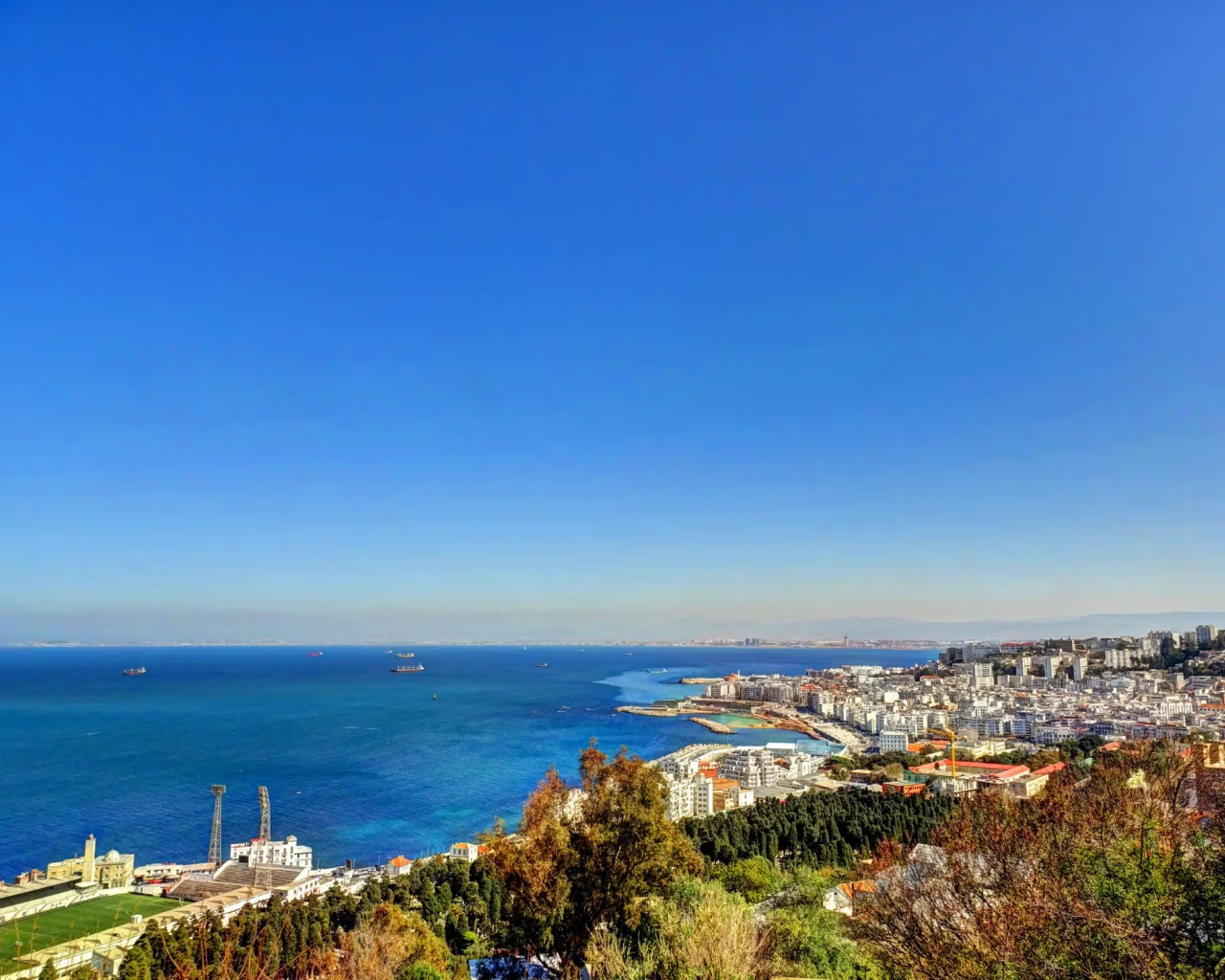
Arrival in Algiers, Algeria’s capital, set along the Mediterranean coast and rising across a series of hills above the sea. After a warm welcome at the airport, transfer to your hotel.
Depending on your arrival time, the first impressions are of a calm and elegant city, where white facades, wide boulevards, and the presence of the sea define the atmosphere. It is a place where different periods of history meet quietly, setting the tone for the journey ahead. Overnight in Algiers.
Travel Details: Expected travel distance ~20 km; Time: ~0.5 h; Overnight stay at a hotel in Algiers. (D)
Day 2: Historic Algiers and the Kasbah
This morning, step into the Kasbah of Algiers, the old heart of the city and a place where its history is still lived rather than simply preserved. Built during the Ottoman period, the Kasbah once formed a powerful coastal stronghold, yet today its narrow streets and layered houses reveal a quieter rhythm of everyday life.
As you walk through its winding alleys, the city reveals—how it grew between the sea and the hillside, shaped by trade, empire, and local communities. Hidden courtyards, small mosques, and viewpoints towards the harbour offer glimpses into a past that remains closely tied to the present.
Continue to the Palais des Rais, a restored complex along the waterfront that once marked the edge of the old city. Its architecture reflects Algiers’ connection to the Mediterranean world, when the city played an important role in regional maritime networks.
Later, visit Notre-Dame d’Afrique, set high above the bay. From here, the full setting of Algiers unfolds bringing together the different layers of the city in a single view. Return to the hotel in the late afternoon.
Highlights of the Day:
- Kasbah of Algiers — Walk through a living Ottoman-era quarter where narrow streets and layered houses reveal centuries of urban life
- Palais des Rais (Bastion 23) — Explore a restored seafront complex reflecting Algiers’ maritime past and Mediterranean connections
- Notre-Dame d’Afrique — Take in wide views over the city and coastline from one of Algiers’ most iconic viewpoints
Travel Details: Expected travel distance ~25 km; Time: ~1 h; Overnight stay at a hotel in Algiers. (B/-/D)
Day 3: Gardens, Museums and Modern Algiers
This morning, continue exploring Algiers from a different perspective, focusing on its cultural and modern identity. Begin with a visit to the Bardo Museum, where the collections trace the country’s past through archaeological finds and reflect Algeria’s place within a wider Mediterranean world.
From here, continue to the Hamma Botanical Garden, one of the most important gardens in North Africa. Laid out during the 19th century, it offers a quieter side of the city, where shaded avenues and diverse plant collections create a natural retreat within an urban setting.
Later, visit the Martyrs’ Monument, a defining landmark of modern Algiers. Built to commemorate the country’s struggle for independence, it stands high above the city, offering a broader view of the capital and its more recent history. Return to your hotel in the late afternoon. Overnight in Algiers.
Highlights of the Day:
- Bardo Museum — Discover collections that trace Algeria’s history through archaeology and cultural heritage
- Hamma Botanical Garden — Stroll through one of North Africa’s most important gardens, offering a quiet contrast within the city
- Martyrs’ Monument — Visit a landmark of modern Algeria, commemorating independence and overlooking the capital
Travel Details: Expected travel distance ~30 km; Time: ~1–1.5 h; Overnight stay at a hotel in Algiers. (B/D)
Day 4: Roman Coast and Journey to the M’zab Valley
This morning, depart Algiers and follow the Mediterranean coast west towards Cherchell, a town with deep historical roots. Once an important Roman settlement, it preserves traces of different civilisations that shaped the region. Visit the local museum, where collections reflect this layered past, from antiquity to early Islamic periods.
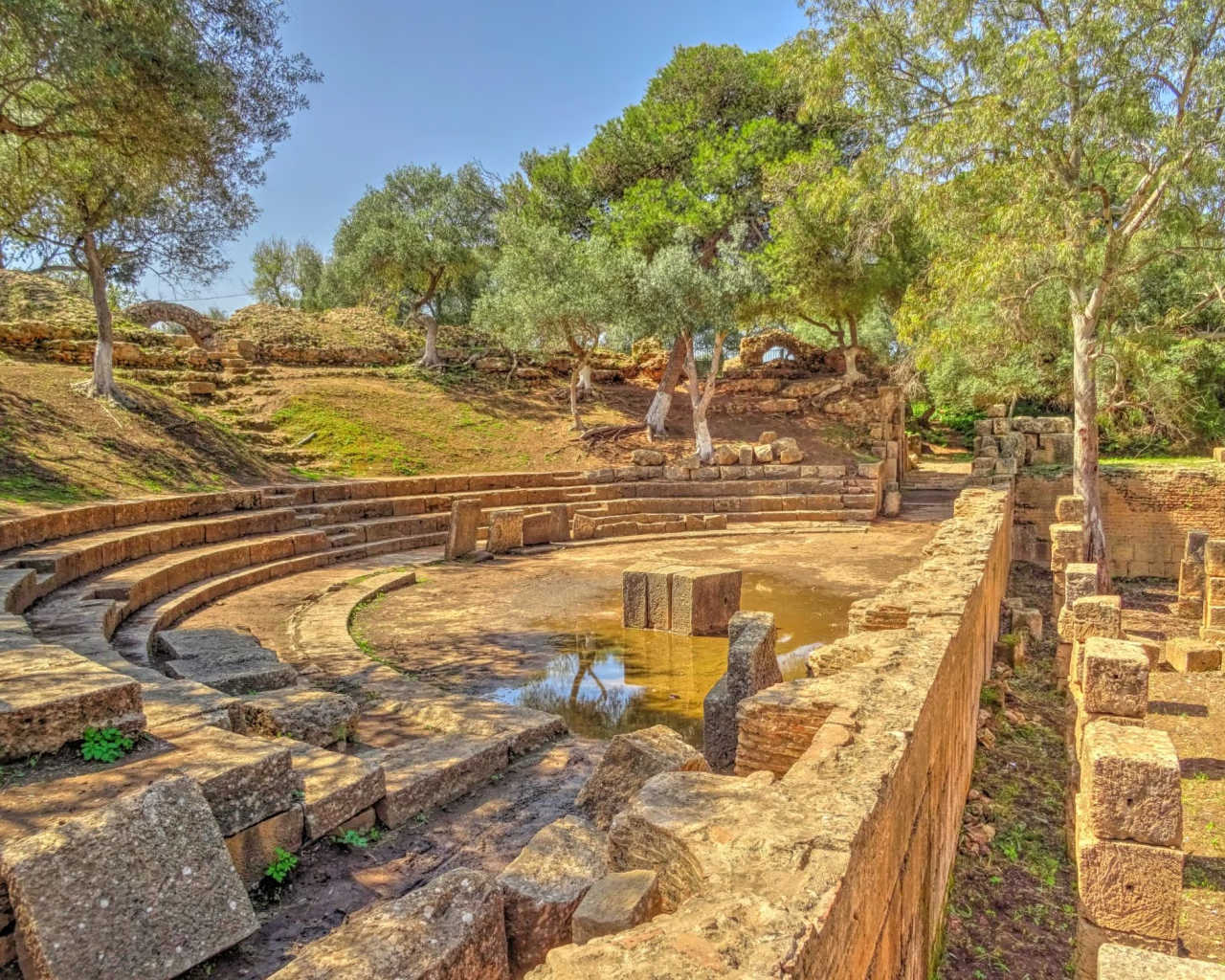
Continue to Tipaza, one of the most remarkable Roman sites in North Africa. Set directly above the sea, its ruins stretch across open ground, where temples, villas, and ancient streets remain visible against the backdrop of the Mediterranean. The setting itself gives a sense of how closely daily life was once connected to the landscape.
Nearby, visit the Royal Mausoleum of Mauretania, an imposing monument linked to the ancient Numidian kingdoms. Standing alone on a hill, it marks a different chapter in the region’s history, before the Roman period.
In the afternoon, return to Algiers and transfer to the airport for your domestic flight south to Ghardaïa. Upon arrival, the setting changes noticeably—from the Mediterranean coast to the desert environment of the M’zab Valley, where traditional architecture and community life define the landscape. Overnight in Ghardaïa.
Highlights of the Day:
- Roman heritage along the Mediterranean coast — Discover ancient cities where ruins stand above the sea, reflecting Algeria’s place in the classical world
- Tipaza archaeological site — Walk through one of North Africa’s most striking Roman landscapes, set between history and the open Mediterranean
- Berber culture in the M’zab Valley — Arrive in a region where architecture, tradition, and community life reflect a distinct and preserved way of life
Travel Details: Expected travel distance ~120 km; Time: ~2–2.5 h driving; domestic flight ~1 h 30 min; Overnight stay at a Berber family hotel in Ghardaïa. (B/-/D)
Day 5: M’zab Valley Berber Traditions and Desert Architecture
Today is dedicated to exploring the M’zab Valley, a UNESCO-listed cultural landscape shaped by centuries of Berber (Mozabite) tradition. This region is defined not only by its architecture but also by a strong social and spiritual structure that continues to guide daily life.
Begin in El Atteuf, the oldest of the M’zab settlements, where the compact layout of the ksar reflects a carefully organised community built around religious and social principles. Visit the mausoleum of Cheikh Sidi Brahim, an important spiritual figure in the region.
Continue to Ghardaia, the main town of the valley, where daily life unfolds around markets and public spaces. A stroll through its streets offers insight into a way of life that has remained closely connected to tradition, despite the passage of time.
In the afternoon, visit Beni Isguen, considered the most conservative and well-preserved town in the valley. Known for its strict customs and strong identity, it offers a deeper understanding of Mozabite culture, particularly through its local market and community structure. Return to your accommodation in the late afternoon. Overnight in Ghardaia.
Highlights of the Day:
- Mozabite ksars of the M’zab Valley — Discover fortified desert towns shaped by a unique Berber architectural and social system
- El Atteuf and Beni Isguen — Explore the oldest and most traditional settlements of the valley
- Living Berber culture — Experience a community where traditions, beliefs, and daily life remain closely connected
Travel Details: Expected travel distance ~40 km; Time: ~1–1.5 h; Overnight stay at a Berber family hotel in Ghardaia. (B/-/D)
Day 6: Oasis Life in the the M’zab Valley and Journey Towards the Sahara
This morning, continue exploring the M’zab Valley with a visit to Bonoura, one of the historic ksars set along the edge of the oasis. Like the other settlements in the region, it reflects a way of life shaped by the environment, community, and careful use of resources.
From here, visit Tafilalet, a modern ecological extension of the valley designed in harmony with traditional Mozabite architecture. It offers a different perspective—how the region adapts to contemporary needs while preserving its identity.
Later, walk through the palm grove, the natural heart of the oasis. Under the shade of date palms, a network of irrigation channels supports layered agriculture, illustrating how life has been sustained in this desert environment for centuries.
In the evening, transfer to the airport for your overnight flight south to Djanet, marking the transition from the structured world of the M’zab Valley to the vast and remote landscapes of the Sahara.
Highlights of the Day:
- Bonoura and traditional ksars — Explore desert settlements shaped by environment and community life
- Tafilalet eco-project — Discover a modern interpretation of Mozabite architecture and sustainability
- Palm grove of the M’zab Valley — Experience the oasis system that sustains life in the desert
Travel Details: Expected travel distance ~30 km; Time: ~1–1.5 h; evening airport transfer; overnight flight to Djanet. Overnight stay at a hotel in Djanet (B/-/D)
Day 7: Arrival in Djanet – Entering the Tuareg Sahara
In the early hours of the morning, arrive in Djanet, a remote town set at the edge of the Tassili n’Ajjer. After a short transfer to your accommodation and some rest, the day begins at a slower pace, allowing time to adjust to the rhythm of the desert and its vast, open surroundings.
Later, depart towards the Essendilène canyon, one of the most striking landscapes in the region. As you walk through the narrow passages, you will come across a hidden guelta, a natural water source surrounded by rock formations, which offers a rare contrast to the arid environment and a first close encounter with the Sahara's diversity.
In the afternoon, continue towards the dunes of Erg Admer. As the light softens, the landscape opens into wide expanses of sand, where the scale of the desert becomes fully apparent.
By evening, settle into a traditional desert camp. Dinner is served under the open sky, and the night is spent in bivouac, marking your first experience of life in the Tuareg Sahara.
Highlights of the Day:
- Arrival in Djanet and the Tuareg Sahara—Enter a remote desert region shaped by Tuareg culture and way of life
- Essendilène canyon and guelta—Walk through narrow rock formations to a hidden desert water source.
- Sahara bivouac experience—Overnight in the desert under open skies
Travel Details: Expected travel distance ~50 km; Time: ~2 h; walking ~1–2 h; Overnight in bivouac. (B/L/D)
Day 8: Rock Formations and Prehistoric Landscapes of the Tuareg Sahara
The day begins in the open desert, surrounded by silence and wide horizons. Following breakfast, continue deeper into the landscapes of Tassili n’Ajjer, where rock formations shaped by wind and time create one of the Sahara’s most distinctive environments.
Head towards Tikoubaouine, known for its natural rock arch rising from the desert floor. Along the way, pass ancient sites, including a Neolithic tomb, offering a first connection to the region’s distant past and the people who once lived in these now-arid lands.
Continue to the area of Tilaline, where prehistoric cave paintings reveal scenes of life from thousands of years ago, when the Sahara was a greener and more inhabited landscape. These images provide a rare insight into the early human presence and the long history of the region.
As the day draws to a close, head towards Ina Loukou, where the fading light turns the desert into a kaleidoscope of shifting hues. Set up camp for the night and enjoy dinner under the open sky, surrounded by the stillness of the Tuareg Sahara's vast expanse.
Highlights of the Day:
- Tikoubaouine rock arch — Discover one of the Sahara’s most striking natural formations
- Prehistoric cave paintings of Tilaline — Explore ancient artwork revealing early human life in the region
- Deep Sahara immersion — Experience remote desert landscapes shaped by time and silence
Travel Details: Expected travel distance ~80 km; Time: ~3–4 h (4x4 driving); Overnight in bivouac. (B/L/D)
Day 9: Rock Art, Desert Landscapes, and Return to Djanet
The morning begins in the open desert, as the light gradually reveals the shapes and textures of the surrounding landscape. Continue the journey through the Tassili region, passing through areas known for their distinctive rock formations and ancient geological landmarks.
Visit the site of Timghas, where unusual rock formations and prehistoric paintings reflect the long natural and human history of the Sahara. From Tigherghert, head to one of the region's most famous engravings, the "Crying Cow", a striking image dating back thousands of years, which provides a glimpse into a very different past climate.
After lunch, begin the return journey towards Djanet. The transition is gradual, as the vast openness of the desert gives way to the first signs of settlement.
Upon arrival, explore the town and its local market, where Tuareg craftsmanship is evident in textiles, jewellery, and everyday objects. Following a rest and refresh at the hotel, enjoy dinner and a final evening in the Sahara region. Stay overnight in Djanet.
Highlights of the Day:
- Timghas and desert formations — Discover unique rock landscapes shaped by time and natural forces
- Tigherghert rock engravings — See the famous “Crying Cow,” a key example of Saharan prehistoric art
- Return to Djanet and Tuareg town life — Experience local culture and craftsmanship in the oasis town
Travel Details: Expected travel distance ~90 km; Time: ~3–4 h (4x4 driving); Overnight stay at a hotel in Djanet. (B/L/D)
Day 10: Leaving Djanet and Return to Algiers for Departure
In the early morning, transfer to the airport for your flight from Djanet back to Algiers. As the plane rises above the desert, the vast landscapes of the Sahara unfold one last time—dunes, rock formations, and open horizons gradually fade into the distance.
The journey comes to an end with a final transition from the silence of the Tuareg Sahara to the movement of the capital. Arrival in Algiers and connection with your international departure flight.
From coast to desert, from ancient cities to remote landscapes, this journey leaves a lasting impression of Algeria—its depth, its contrasts, and the quiet presence of its most remote places.
Travel Details: Airport transfer; domestic flight Djanet–Algiers ~3 h 30 min; End of tour. (B/-/-)
Included in The Price
- Accommodation for 5 nights in 3* hotels with breakfast included
- Accommodation for 2 nights in a Berber family hotel/guesthouse with breakfast included (shared basis)
- Accommodation for 2 nights in a Tuareg desert bivouac (shared basis)
- Meals as per itinerary (B – breakfast, L – lunch, D – dinner)
- Transportation as per itinerary by minivan/van
- Airport transfers on Day 1 and throughout the tour
- Access to cities and museums included
- Domestic flight tickets in economy class: Algiers – Ghardaia; Ghardaia – Djanet; Djanet – Algiers; (luggage included up to 15 kg)
- Professional English-speaking tour guide
- Entrance fees as per itinerary
- Tour leader from Adventure Bound (for a minimum of 6 participants)
- Visa procedures and support
Not Included in The Price
- International flight tickets
- Visa fees
- Meals and drinks not included in the program
- Personal expenses
- Personal travel insurance (mandatory)
- Any additional services not mentioned in the program
- Tips
Request Trip Notes
We’ll send you all the details so you can continue tour planning offline

Image Gallery






Contact Us
We’re here to help you plan your adventure!