
Thracian Valley, Bulgaria: Where Ancient Civilizations, Vineyards, and Wild Landscapes Converge
Thracian Valley, Bulgaria: Where Ancient Civilizations, Vineyards, and Wild Landscapes Converge
Tucked between the gentle ridges of the Balkan Mountains and the rolling foothills of the Rhodopes, the Thracian Valley of Bulgaria is a land shaped by time, ritual, and abundance. This is one of Europe’s oldest inhabited regions - a place where ancient kings were buried beneath earthen mounds, where vineyards trace their lineage back millennia, and where nature unfolds in broad, sunlit plains framed by forested hills.
Often overlooked in favor of Bulgaria’s Black Sea coast or alpine landscapes, the Thracian Valley rewards those who travel slowly. It is a destination for history lovers, wine enthusiasts, hikers, and curious travelers seeking authenticity far from crowds. Here, Bulgaria’s past and present exist side by side - quiet, grounded, and deeply rooted in the land.
The Heart of Southern Bulgaria
The Thracian Valley stretches across central and southern Bulgaria, encompassing the fertile lowlands around Plovdiv, Stara Zagora, Chirpan, and Kazanlak. Protected from harsh northern winds by the Balkan Mountains and warmed by southern airflows, the region enjoys one of the most hospitable climates in the country.
Geographically, it is a place of balance: open plains rich in agriculture, rivers such as the Maritsa winding through fields and villages, and distant mountain silhouettes anchoring the horizon. This landscape has sustained civilizations for over 6,000 years - and it still feeds the country today.
For travelers, the valley offers easy access, excellent roads, and a natural flow between cultural sites and outdoor experiences, making it ideal for immersive, multi-day exploration.
Thracian Heritage: Echoes of an Ancient Civilization
Long before Rome laid its roads across the Balkans or Byzantium raised its domes, the Thracians shaped the spiritual and cultural foundations of this land. They were not a single unified empire, but a constellation of tribes bound by shared beliefs, rituals, and an intimate relationship with nature. For millennia, the Thracian Valley was their heartland - a place of sacred hills, fertile plains, and rivers believed to bridge the worlds of gods and humans.
The Thracians were renowned as fearless warriors, but it was their inner world that truly defined them. They believed deeply in the immortality of the soul, a conviction that shaped their burial rituals and monumental tombs. Kings and nobles were laid to rest beneath vast earthen mounds, accompanied by gold, weapons, horses, and offerings meant for the afterlife. These burial sites - still rising from the fields today - are not remnants of a vanished people, but enduring landmarks in the Bulgarian landscape.
Their craftsmanship was extraordinary. Thracian goldwork ranks among the finest of the ancient world, marked by intricate symbolism, flowing forms, and reverence for nature. Treasures unearthed near Kazanlak, Panagyurishte, and Starosel reveal vessels and ornaments used not merely for wealth, but for ritual - wine cups, rhytons, and ceremonial masks that reflect a culture where spirituality and daily life were inseparable.
Modern Bulgaria has inherited far more from the Thracians than archaeological monuments. Elements of folk traditions, music, ritual dances, winemaking, and seasonal celebrations carry echoes of Thracian belief systems. The deep respect for land, cycles of nature, and communal feasting - still visible in village life today - mirror ancient practices once dedicated to deities such as Dionysus, the Thracian god of wine, ecstasy, and rebirth.
Even Bulgaria’s enduring connection to wine finds its roots here. The Thracians were among Europe’s earliest winemakers, and the Thracian Valley’s vineyards follow the same sun-warmed slopes cultivated thousands of years ago. When Bulgarians raise a glass today, they unknowingly continue a ritual older than written history.
To walk through the Thracian Valley is to move through layers of time. The past does not sit behind glass - it breathes through the land, the traditions, and the quiet continuity of life. Bulgaria did not simply inherit Thracian territory; it absorbed Thracian spirit, weaving it into the country’s cultural identity. In this valley, history is not remembered - it is lived.
The Thracian Valley is scattered with thousands of burial mounds (tumuli) - some visible from the road, others hidden among vineyards and fields. Among the most significant sites are:
- The Thracian Tomb of Kazanlak (UNESCO World Heritage Site), famed for its remarkably preserved wall paintings depicting burial rituals and the afterlife.
- The Valley of the Thracian Kings, where monumental tombs such as Golyama Kosmatka reveal stone corridors, carved chambers, and royal burials.
- The Thracian Tomb of Starosel, one of the largest and most impressive cult complexes, set amid forested hills.
These sites are not museum pieces isolated from life - they are woven into the living landscape, reminding visitors that history here is not distant, but ever-present.
Plovdiv and Cultural Landmarks
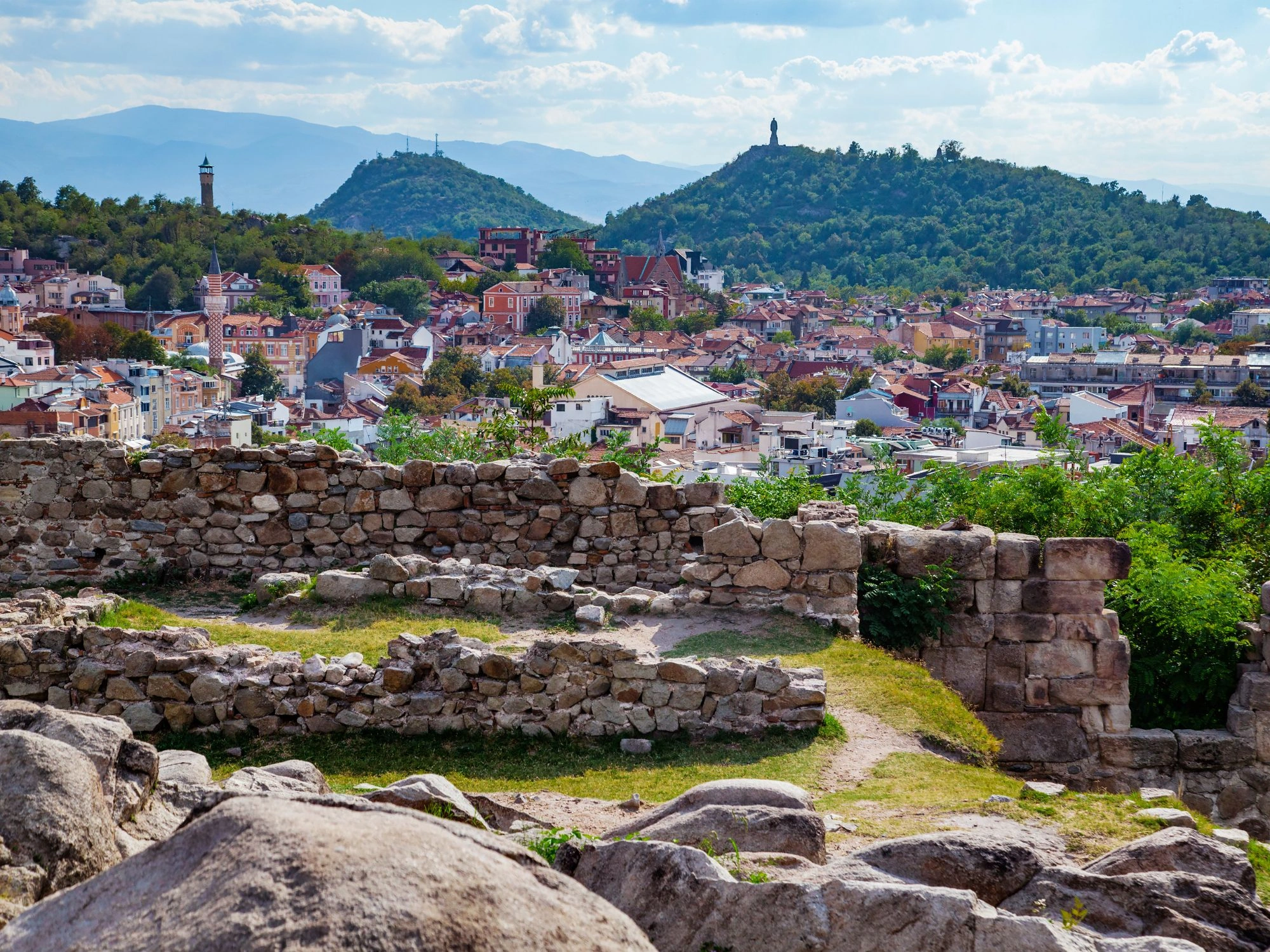
At the heart of the Thracian Valley lies Plovdiv, one of Europe’s oldest continuously inhabited cities and a place where layers of history unfold with rare clarity. Long before it became Roman Philippopolis or Byzantine Trimontium, Plovdiv was a Thracian settlement built upon its iconic seven hills. Every civilization that passed through left something behind - not as ruins pushed to the margins, but as living elements woven into the city’s daily rhythm.
Plovdiv’s Old Town rises gently above the modern streets, its cobbled lanes lined with colorful Bulgarian Revival houses, their wide eaves and ornate interiors telling stories of 19th-century merchants, craftsmen, and cultural awakening. From here, history opens outward: the remarkably preserved Roman Theatre, still hosting performances under open skies, and the Ancient Stadium, hidden beneath the city’s main pedestrian boulevard, quietly reminding visitors that modern life walks directly atop antiquity.
What truly defines Plovdiv, however, is not only its age, but its spirit. The city has long been a crossroads of cultures - Thracian, Roman, Slavic, Ottoman - and this layered identity lives on in its people. Plovdiv feels creative, relaxed, and deeply human. Artists, musicians, winemakers, and students share the streets with families who have lived here for generations. Cafés spill into narrow lanes, conversations linger late into the evening, and life moves at a pace that invites observation rather than urgency.
Districts like Kapana, once a crafts quarter, now pulse with contemporary energy - small galleries, wine bars, and workshops breathing new life into old spaces. Yet even here, the city never feels forced or performative. Plovdiv’s charm lies in its authenticity: a place confident in its past, comfortable in its present, and quietly evolving without losing its soul.
For travelers exploring the Thracian Valley, Plovdiv is more than a cultural highlight - it is a living introduction to Bulgaria itself, where ancient foundations support a vibrant, creative, and welcoming modern life.
Highlights include:
- The Roman Theatre of Plovdiv, still used for performances today.
- The Ancient Stadium, hidden beneath the city’s main pedestrian street.
- Kapana Creative District, where traditional architecture meets contemporary art, cafés, and galleries.
Beyond Plovdiv, smaller towns like Stara Zagora and Chirpan offer museums, Roman remains, and a slower rhythm of daily life that reveals Bulgaria beyond postcards.
Food and Wine: The Soul of the Valley
The Thracian Valley is often called the cradle of Bulgarian wine, and for good reason. Viticulture here stretches back more than 5,000 years, woven into the rituals, beliefs, and daily life of the ancient Thracians who once ruled these plains. Wine was never simply a drink in this region - it was a bridge between the earthly and the divine, a symbol of abundance drawn directly from the soil.
Today, that legacy lives on in sun-drenched vineyards where local grape varieties such as Mavrud, Rubin, and Dimyat thrive in the fertile valley floor. Modern wineries rise gently from the landscape, blending contemporary craftsmanship with traditions passed down through generations. Tastings here are unhurried, often accompanied by sweeping views of rolling hills and distant mountain silhouettes, allowing visitors to experience wine not as a product, but as a reflection of place.
Food in the Thracian Valley follows the same philosophy - honest, seasonal, and deeply rooted in the land. Tables are filled with slow-cooked meats and clay-pot stews that simmer for hours, fresh salads bursting with ripe tomatoes, peppers, and white brined cheese, and warm homemade breads infused with aromatic herbs. Desserts arrive scented with honey and walnuts, sometimes paired with sun-ripened fruit, creating meals that feel both nourishing and ceremonial. Here, eating is never rushed; it is a shared ritual, meant to linger in memory long after the plates are cleared.
Nature and Outdoor Experiences
Beyond its cultural and culinary richness, the Thracian Valley unfolds as a natural crossroads between plains and mountains, offering gentle yet deeply rewarding outdoor experiences. The land opens wide here - vineyards give way to meadows, rivers carve slow paths through farmland, and forested hills rise quietly at the edges of the horizon.
To the north, Central Balkan National Park introduces a more dramatic contrast, where alpine trails lead to waterfalls, deep gorges, and high mountain pastures alive with wildlife. To the south, the Rhodopi Mountains soften into ancient forests and winding paths, their caves and rock formations steeped in legend and folklore. These landscapes invite exploration at an unhurried pace, whether on foot, by bicycle, or simply through stillness and observation.
Travelers can wander through vineyard-lined roads and rural villages, where daily life moves in rhythm with the seasons, or climb the historic Shipka Pass, where sweeping mountain views meet pivotal moments of Bulgarian history. In late spring, the fields near Kazanlak bloom with roses, filling the air with fragrance, while wetlands and river plains offer quiet sanctuaries for birdwatching and photography. Nature in the Thracian Valley is never overwhelming - it is open, generous, and deeply intertwined with the human story that has unfolded here for thousands of years.
Weather
The Thracian Valley benefits from a mild continental climate, one of the reasons it has sustained agriculture, winemaking, and human settlement for thousands of years. Sheltered by surrounding mountain ranges, the valley experiences warm summers, gentle transitional seasons, and relatively mild winters, especially in the lowlands.
- Spring (April to June) arrives gradually, bringing fresh green landscapes, wildflowers, and a renewed sense of life to the countryside. Daytime temperatures typically range between 15–25°C (59–77°F), making it an ideal season for cultural sightseeing, walking tours, and exploring archaeological sites without the intensity of summer heat. Spring is also a time of festivals and agricultural renewal, adding a lively rhythm to the region.
- Summer (July to September) is warm, dry, and sun-filled. Temperatures commonly sit between 28–35°C (82–95°F), particularly in July and August, creating perfect conditions for vineyard visits, wine tastings, and long evenings outdoors. While the midday sun can be strong, mornings and late afternoons are especially pleasant, and nearby mountains offer cooler escapes for nature lovers.
- Autumn (October) brings a noticeable shift in atmosphere. Vineyards turn gold and deep red, harvest season fills the valley with activity, and the air becomes crisp and clear. Temperatures usually range from 12–22°C (54–72°F), ideal for photography, hiking, and slow travel. This is one of the most rewarding times to visit, when cultural depth, nature, and gastronomy align effortlessly.
- Winter in the Thracian Valley is generally mild compared to northern Bulgaria. Daytime temperatures in the plains often hover between 0–8°C (32–46°F), with occasional frost and limited snowfall. While the valley remains accessible year-round, the surrounding mountains may receive snow, offering scenic contrasts and quieter travel experiences.
For travelers seeking the best balance of comfortable weather, cultural richness, wine experiences, and natural beauty, late spring (May–June) and early autumn (September–October) stand out as the most rewarding times to explore the Thracian Valley.
Why Visit the Thracian Valley with Purpose
The Thracian Valley stands as one of Bulgaria’s most profound cultural landscapes - a place where ancient civilizations, living traditions, and natural abundance converge. This is not history frozen in time, but heritage that continues to shape identity, customs, and daily life. Every tomb, vineyard, and village tells part of a story that has never truly ended.
For travelers seeking to understand Bulgaria beyond its surface, the Thracian Valley offers rare insight. It is a region where the past informs the present, where rituals echo across generations, and where the soul of the country can still be sensed in its most authentic form. To journey here is to encounter Bulgaria at its roots.

Suggested Adventures
Browse our related tours to find your next unforgettable journey


Related Posts
Lorem ipsum dolor sit amet, consectetur adipiscing elit.

Bulgaria: A Land of Hidden Treasures and Timeless Traditions

Thracian Treasures in Bulgaria: Unearthing a Forgotten Civilization

What You Need to Know Before Traveling to Bulgaria


