
Hvar, Croatia: Sun-Drenched Beaches, Historic Charm & Island Life in the Adriatic
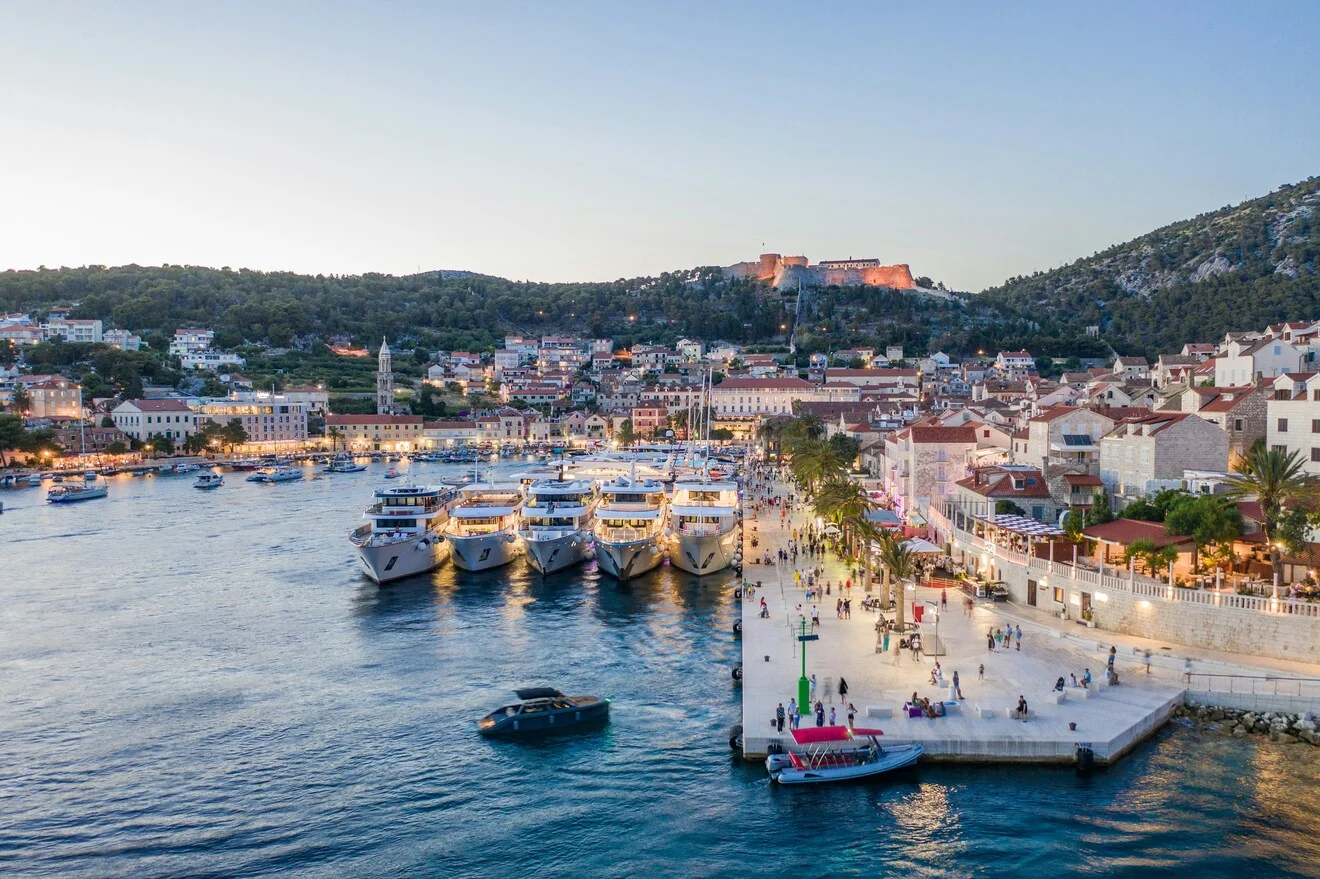
Hvar, Croatia: Sun-Drenched Beaches, Historic Charm & Island Life in the Adriatic
Hvar is the kind of place that feels almost imagined - where sunlight lingers a little longer, the sea shifts between impossible shades of blue, and every stone seems to hold a story. Floating in the central Dalmatian archipelago of Croatia, this island has long been a meeting point of cultures, a haven for travelers, and a stage where history and hedonism coexist effortlessly.
From the moment you arrive, Hvar greets you with light. It is officially one of the sunniest places in Europe, basking in over 2,700 hours of sunshine each year. Summers stretch warm and golden, with temperatures hovering between 25–30°C, while the sea remains inviting well into autumn. Even in spring and early October, there is a softness to the air - perfect for wandering, lingering, and slowing down.
At the heart of the island lies Hvar Town, a place where time folds in on itself. Narrow limestone streets wind through a compact old town, polished smooth by centuries of footsteps. Venetian influences are etched into its architecture - arched windows, elegant squares, and weathered façades that glow honey-colored at sunset. The main square, one of the largest in Dalmatia, opens toward the sea, anchored by the 16th-century St. Stephen’s Cathedral.
Above it all rises the Hvar Fortress (Španjola), a sentinel watching over the harbor since medieval times. The climb up is steady but rewarding, and at the top, the view unfolds like a painting - the terracotta rooftops below, the scattered Pakleni Islands across the water, and the endless Adriatic stretching beyond. It’s the kind of place where you pause, not just to look, but to feel.
Hvar’s story runs deep. The island has been inhabited since prehistoric times and was later settled by the Greeks in the 4th century BC, who established one of the oldest known agricultural plains in Europe - the Stari Grad Plain, still in use today and protected as a UNESCO World Heritage Site. Rows of lavender, olive groves, and vineyards continue to shape the landscape, much as they did over 2,000 years ago.
Step away from the buzz of Hvar Town, and the island reveals a quieter rhythm. Hidden coves fringe the coastline - small, pebbled beaches where the water is impossibly clear and the only sound is the gentle lapping of the sea. A short boat ride takes you to the Pakleni Islands, a scattering of pine-covered islets where time slows even further. Here, afternoons dissolve into swims, sun-drenched lunches, and the scent of rosemary carried on the breeze.
For those drawn inland, Hvar offers another layer entirely. The hills are lined with vineyards producing some of Croatia’s finest wines, particularly robust reds like Plavac Mali. Family-run wineries welcome visitors with an easy hospitality - wooden tables, homemade olive oil, and stories poured alongside each glass. Olive groves stretch across the terrain, their silvery leaves catching the light, while fields of lavender - once the island’s signature crop - still bloom in early summer, tinting the landscape in soft purples.
Food on Hvar is simple, seasonal, and deeply rooted in tradition. Fresh seafood is a cornerstone - grilled fish drizzled with local olive oil, octopus slow-cooked under a bell (peka), and black risotto infused with cuttlefish ink. There’s also pašticada, a rich Dalmatian beef stew served with handmade gnocchi, and an abundance of local cheeses, figs, and herbs. Meals here are not rushed; they unfold slowly, often accompanied by wine and conversation that lingers long after the plates are cleared.
The people of Hvar carry the warmth of the island in their character. There is a quiet pride in their heritage and a natural ease in the way they welcome visitors. Conversations happen easily - whether over coffee in a shaded square or during a wine tasting in a hillside cellar. Life moves at a Mediterranean pace, where time is measured less by hours and more by moments.
And then, as the sun begins to dip, Hvar shifts.
The island is famous - some would say legendary - for its nightlife. In the summer months, Hvar Town transforms into one of the Adriatic’s most vibrant social scenes. Beach clubs hum with music, yachts gather in the harbor, and evenings stretch seamlessly into early mornings. Places like Carpe Diem and Hula Hula Beach are not just venues, but experiences - where sunsets, cocktails, and music blend into something electric.
Yet what makes Hvar truly special is its balance. You can spend one day immersed in energy - dancing barefoot by the sea, surrounded by people from across the world - and the next drifting through a quiet vineyard or swimming alone in a hidden bay. Few places offer such contrast without losing their essence.
There are also small, fascinating details that give Hvar its character. It was once a major center for lavender production in Europe. The island has one of the oldest public theatres in Europe, dating back to 1612. And despite its modern reputation as a luxury destination, its roots remain deeply agricultural and authentic.
Hvar is not just an island you visit - it’s one you experience in layers. In the warmth of the sun on your skin, in the taste of wine shaped by centuries-old soil, in the echo of footsteps along stone streets that have seen empires rise and fall.
And long after you leave, it lingers - not as a checklist of sights, but as a feeling. A slow, sunlit memory of a place where life, in all its forms, is celebrated with effortless grace.

Suggested Adventures
Browse our related tours to find your next unforgettable journey


Related Posts
Lorem ipsum dolor sit amet, consectetur adipiscing elit.
.webp)


