
A Taste of Georgia: Discover the History, Flavors, and Soul of Georgian Cuisine
A Taste of Georgia: Discover the History, Flavors, and Soul of Georgian Cuisine
Step into Georgia, a land where mountains cradle ancient monasteries, where vineyards stretch beneath the sun like emerald rivers, and where the aroma of warm bread, herbs, and spices drifts through the air as naturally as stories passed from one generation to the next. To speak of Georgia is to speak of its cuisine - an extraordinary tapestry woven from centuries of migration, trade, conquest, and celebration. It is not merely food but a living expression of the Georgian spirit: generous, bold, layered with history, and deeply rooted in the rituals of hospitality.
Georgian cuisine traces its origins to the Silk Road, where caravans once traveled between Asia and Europe, carrying spices, ideas, and flavors as precious as gold. From Persia came fragrant herbs; from the Mediterranean, the love of wine and olives; from Central Asia, hearty dumplings; and from the Caucasus itself, an ancient reverence for the earth and all it yields. Over centuries, these influences did not compete but instead blended into something beautifully distinct - a cuisine whose soul remains unmistakably and proudly Georgian.
At the heart of Georgian cuisine lies a profound respect for the seasons. During the warm months, markets overflow with tomatoes bursting with sweetness, cucumbers crisp as mountain air, and fragrant bundles of tarragon, dill, and purple basil. Autumn brings the aroma of roasting walnuts and the slow simmer of stews rich with pomegranate and plum. Winter offers comforting clay pots of beans and cornmeal simmered to velvety perfection, while spring awakens fields of young greens for the beloved pkhali - vibrant salads bound with herbs and crushed nuts. Nature dictates the rhythm, and Georgians have long learned to listen.
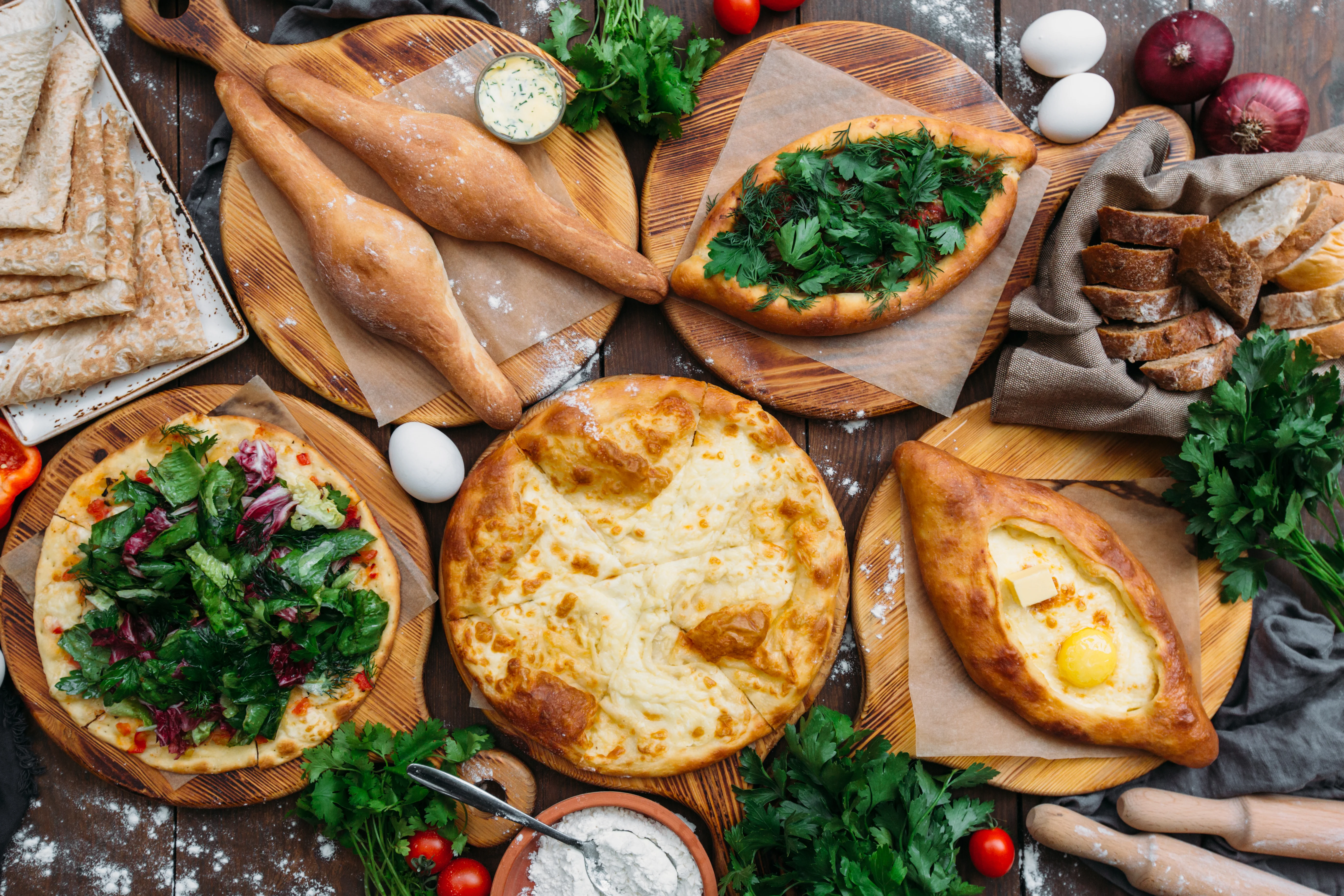
No discussion of Georgian cuisine is complete without khachapuri, a dish that transcends its simple definition as “cheese bread.” It is the country’s warm embrace - a golden halo of dough filled with molten cheese, sometimes shaped like a boat and crowned with a glowing yolk. Each region shapes it differently, each family guards its own method, and every traveler remembers the moment they first tear into its soft, steamy center. Equally iconic is khinkali, the plump dumpling that arrives like a small gift at the table. Filled with spiced meat and fragrant broth, it carries the history of nomadic shepherds and mountain tribes - a food meant to warm the body and fortify the spirit.
Beyond recipes and ingredients lies something deeper: the supra. More than just a feast, it is a ritual - a celebration of life, friendship, memory, and hope. At a Georgian table, guests are considered blessings. A tamada, or toastmaster, guides the evening’s flow with poetic toasts that rise like prayers. Stories are shared, songs swell in harmony, and dishes appear endlessly, each prepared with patience and pride. Food becomes the language through which Georgians express gratitude and connection. It is here, in the soft glow of candlelight and the warmth of a crowded table, that the essence of Georgian hospitality truly comes alive.
Wine, too, holds a sacred place. Georgia is one of the world’s oldest wine regions, with traditions dating back more than 8,000 years. In villages across the country, families still ferment grapes in qvevri - large clay vessels buried beneath the earth, allowing the wine to mature in complete harmony with nature. These ancient methods impart an earthy, amber beauty to the wine, reflecting the landscape itself. For Georgians, wine is not an indulgence; it is a thread that connects them to their ancestors. Every sip carries a memory, a blessing, or a story waiting to be shared.
The flavors of Georgia are bold yet balanced, rustic yet refined. Walnuts serve as the backbone of many dishes, ground into rich pastes and seasoned with garlic, blue fenugreek, and coriander. Pomegranate seeds gleam like rubies atop stews, their acidity cutting through hearty meats. Herbs are used not merely as accents but as foundational elements, with mixtures so fragrant they evoke the sensation of walking through a mountain meadow at dawn. Even simple dishes, such as lobio - slow-cooked beans served with pickles and mchadi corn bread - offer comfort steeped in tradition.
History has tested Georgia many times, yet its cuisine remains a testament to resilience and joy. Through invasions, hardships, and political upheavals, the Georgian table has remained abundant - a place where identity is preserved and celebrated. Food became a quiet rebellion, a declaration that despite everything, life would continue to be full of warmth and flavor.
To taste Georgian cuisine is to follow the journeys of ancient traders, to sit at a table where strangers become family, and to immerse yourself in a culture that deeply believes in the power of sharing. It is to savor the smoky heat of adjika, the pillowy softness of fresh bread lifted from a tone oven, and the tender sweetness of churchkhela hanging like jewels in market stalls. With every bite, you feel the heartbeat of a nation that cooks with its history, farms with devotion, and welcomes with open arms.
In Georgia, food is not merely consumed - it is experienced. It encourages you to slow down, savor each bite, connect with others, and realize that the story of a people can be as vividly tasted as it can be told. Long after the last dish is cleared, the memory of those flavors lingers - warm and enduring, like the echo of a toast raised beneath a star-filled Caucasian sky.

Suggested Adventures
Browse our related tours to find your next unforgettable journey





Related Posts
Lorem ipsum dolor sit amet, consectetur adipiscing elit.

Mtskheta: The Spiritual Heart of Georgia
.webp)
Svaneti: Georgia’s Hidden Corner of the Caucasus

What You Need to Know Before Traveling to Georgia

Vardzia: Exploring Georgia’s Cave City and Its Rich History
.webp)


