
Mavrovo National Park: Where Mountains Remember and Silence Speaks
Mavrovo National Park: Where Mountains Remember and Silence Speaks
Mavrovo National Park in North Macedonia lies in the far west of the country, close to the borders with Albania and Kosovo. It is the largest national park in North Macedonia and one of its most remote and atmospheric regions. Here, mountain ridges stretch toward the horizon, forests move with the wind, and villages remain deeply connected to the land. Mavrovo National Park does not overwhelm the visitor. It invites them to slow down.
This is a destination shaped by altitude, weather, and memory. Landscapes change gradually, and the experience unfolds in quiet moments rather than dramatic spectacles.
Where Is Mavrovo National Park and What Defines Its Landscape
Mavrovo National Park covers a vast mountainous area dominated by the Bistra Mountain range and framed by some of the highest peaks in the Balkans. The terrain is largely karst, with rolling plateaus, deep sinkholes, underground rivers, and wide alpine pastures.
Mount Korab, the highest peak in both North Macedonia and Albania, rises above the park’s western edge. Hiking Mount Korab is one of the most challenging and rewarding experiences in Mavrovo National Park, offering long ascents, changing ecosystems, and far-reaching views across borders.
The valleys are equally important to the park’s identity. Rivers feed waterfalls, springs, and seasonal streams, creating a landscape that feels alive and constantly in motion.
Mavrovo Lake and the Sunken Church
Mavrovo Lake is one of the most photographed sights in Mavrovo National Park. Created as part of a hydroelectric project, the lake has become an essential feature of the region. On its shore stands the Church of St. Nicholas, partially submerged for much of the year.
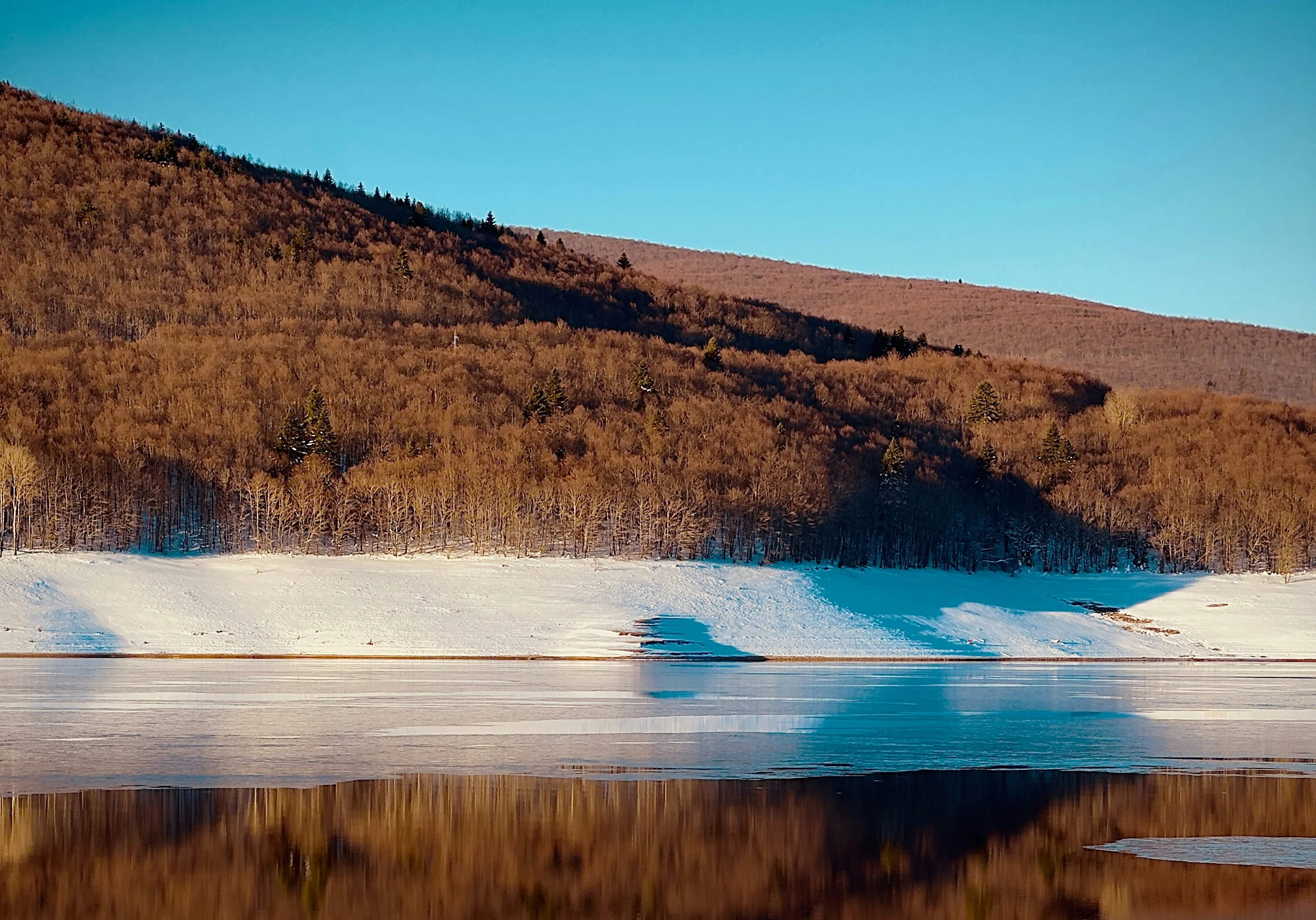
During summer, lower water levels reveal more of the church’s stone structure. In winter and spring, the lake rises again, slowly reclaiming the building. The scene is quiet and reflective, embodying the layered relationship between people, water, and mountains in Mavrovo National Park.
Forests and Wildlife of Mavrovo National Park
Forests cover more than half of Mavrovo National Park. Lower elevations are dominated by old-growth beech forests, while higher slopes are lined with pine and fir. These forests provide habitat for some of the Balkans’ most elusive wildlife.
Brown bears, wolves, Balkan lynx, chamois, and golden eagles all live within the park. Encounters are rare, but signs of wildlife are common, reinforcing the sense that Mavrovo remains a functioning wilderness rather than a curated nature reserve.
Traditional Mountain Villages
Villages such as Galichnik, Lazaropole, Janče, and Gari are integral to the character of Mavrovo National Park. Built from stone and wood, they reflect centuries of adaptation to altitude and isolation.
Galichnik is particularly known for its architecture and cultural traditions, but daily life across the park remains quiet and seasonal. Staying in these villages offers insight into a way of life that has changed slowly, shaped by weather, livestock, and mountain rhythms.
Weather in Mavrovo National Park and Seasonal Temperatures
Weather in Mavrovo National Park is strongly influenced by elevation. Summers from June to September are mild and suitable for hiking in Mavrovo National Park, with daytime temperatures typically between 15°C and 25°C (59°F to 77°F). Nights are cooler, especially in higher areas.
Spring and autumn bring variable conditions. Temperatures usually range from 5°C to 15°C (41°F to 59°F), with fog, rain, and rapid weather changes common. These seasons are visually striking but require flexibility.
Winters are long and snowy. From December to March, temperatures often range from -10°C to 5°C (14°F to 41°F). Snow covers much of the park, limiting access to some areas but creating opportunities for winter sports and a deeply quiet atmosphere.
Best Time to Visit Mavrovo National Park
The best time to visit Mavrovo National Park is late spring through early autumn, when trails are accessible and villages are active. Summer is ideal for hiking, cultural exploration, and extended stays. Autumn offers color, cooler air, and fewer visitors, while winter appeals to travelers seeking snow and solitude.
A Destination for Slow and Meaningful Travel
Mavrovo National Park is not a place for hurried itineraries. It suits travelers who value space, silence, and immersion. Hiking without urgency, sharing coffee in mountain homes, and watching weather roll across ridges are central to the experience.
In Mavrovo National Park, nature does not compete for attention. It exists on its own terms. And for those willing to move at its pace, it offers something increasingly rare: time, quiet, and a deep sense of place

Suggested Adventures
Browse our related tours to find your next unforgettable journey


Related Posts
Lorem ipsum dolor sit amet, consectetur adipiscing elit.
.webp)


