
Dushanbe, Tajikistan: The “Monday City” with a Big Heart
Dushanbe, Tajikistan: The “Monday City” with a Big Heart
Step into Dushanbe, where tree-lined boulevards, grand monuments, and soft evening light converge in a city that feels more like a warm welcome than a capital. Nestled in the Gissar Valley and framed by distant mountains, Dushanbe is Tajikistan’s vibrant heart - a place where Persian poetry lives in everyday speech, where parks come alive after sunset, and where the past and present coexist harmoniously.
Its name reveals much about its spirit. “Dushanbe” literally means “Monday” in Tajik, a reference to the old Monday market that once attracted traders and villagers from across the region. What began as a simple bazaar has grown into a capital city of nearly a million people: a crossroads of cultures, a gateway to the Pamir and Fann mountains, and a city locals often describe as “small, but with a big heart.”
Walk its streets, and you’ll feel it: the blend of Soviet-era avenues and modern glass buildings, the aroma of freshly baked bread drifting from bakeries, the sound of children laughing near fountains, and the quiet pride of a people who have preserved their traditions through every chapter of history.
From Monday Market to Modern Capital
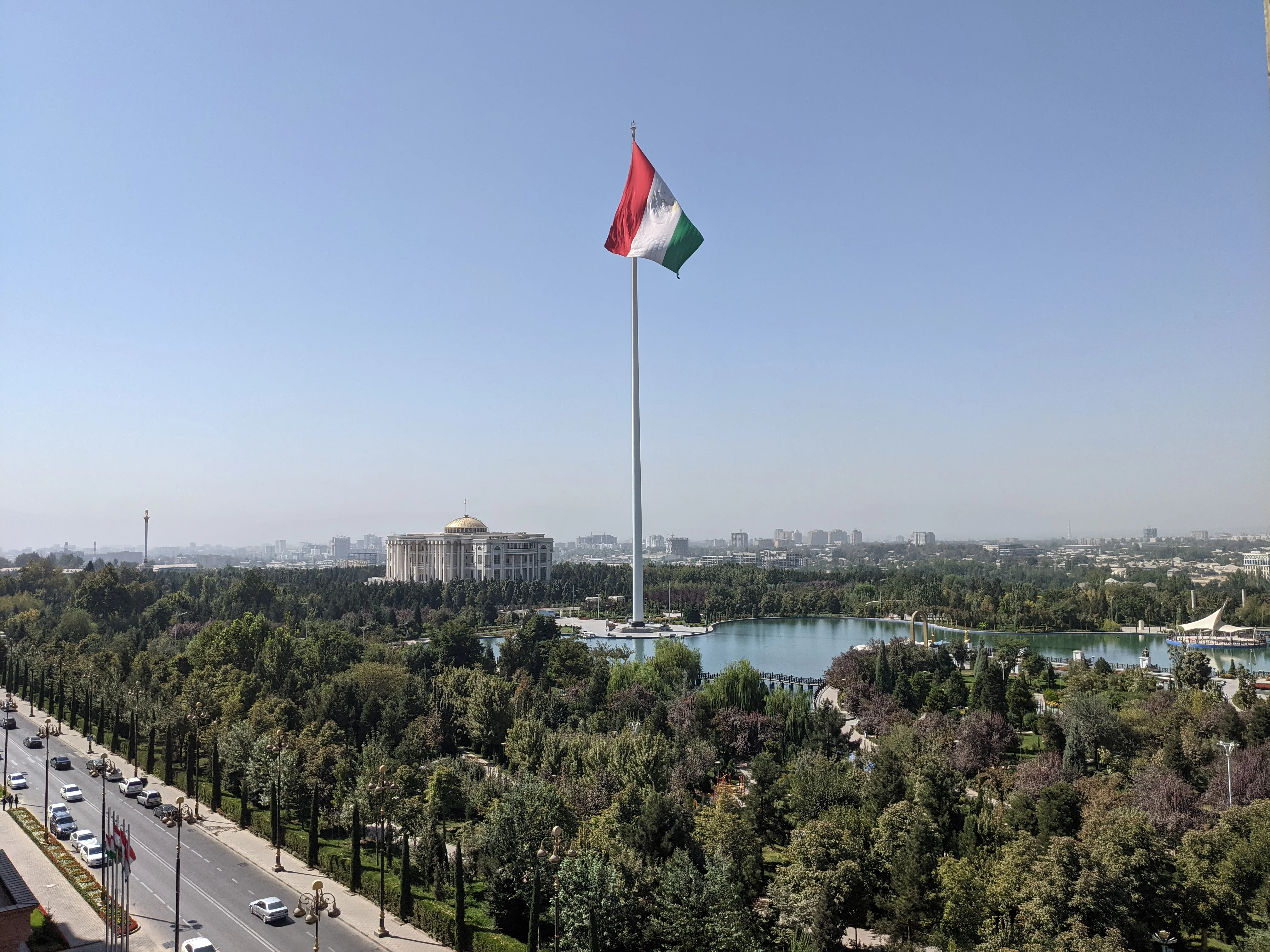
It’s hard to imagine, standing beneath the towering Somoni statue or the enormous national flag, that this place was once merely a rural trading village. For centuries, the settlement that became Dushanbe was primarily known for its weekly bazaar. Caravans passed through from the Gissar Valley and beyond, traveling toward Samarkand, Bukhara, the Pamirs, and Afghanistan. The Monday market was the highlight of the week - so central to local life that the town derived its name from it.
In the 1920s, everything changed. The new Soviet authorities needed a capital for the Tajik Autonomous Republic and selected this crossroads of trade, with its mild climate, as their base. They constructed broad avenues, administrative buildings, schools, theaters, and apartment blocks, transforming the former market village into a carefully planned city. Later renamed Stalinabad and then reverted to Dushanbe, the city grew rapidly as people arrived from across the region.
Independence in 1991 and the subsequent difficult years of civil conflict left a lasting impact, but they did not define the city. Dushanbe emerged from that period determined to rebuild and reinvent itself. New parks, cultural centers, and government buildings rose alongside old Soviet landmarks. Today, it remains a capital still evolving, yet confident in its identity: simultaneously Central Asian, Persianate, Soviet-influenced, and uniquely Tajik.
A City Where Poetry Lives in Everyday Life
To truly understand Dushanbe, you must feel how deeply culture permeates the city. Here, Tajik - a variety of Persian - is spoken with warmth and musical cadence, and poems by Rudaki and Ferdowsi are not only studied in school but also quoted at family gatherings and celebrations.
You first notice it in Rudaki Park, located in the city center. Winding paths curve around fountains and flower beds; young couples stroll hand in hand, while children race beneath tall, shady trees. At the heart of the park stands the statue of Rudaki, Tajikistan’s beloved national poet, positioned beneath a grand arch - a reminder that literature and language are fundamental to the nation’s identity.
Culture in Dushanbe doesn’t feel confined to institutions, although there are many. The National Museum of Tajikistan, located near the towering flagpole, guides you through prehistoric artifacts, medieval art, and contemporary works - all in a single afternoon. The Opera and Ballet Theatre presents performances that blend European influences with local themes. The small but atmospheric Gurminj Museum of Musical Instruments introduces visitors to the haunting sounds of Pamiri and Central Asian instruments.
But perhaps the truest stage in Dushanbe is the chaikhana - the tea house. Here, surrounded by intricate woodwork, painted ceilings, and the gentle clinking of glasses, people talk for hours about everything from politics and football to family stories, all over endless cups of green or black tea. The grand Navruz Palace, a vast and ornate modern teahouse, might appear almost palatial, but its core purpose remains the same: conversation, connection, and hospitality.
People, Everyday Life, and the Rhythm of the City
Dushanbe is a young city - not in years, but in energy. Students from across the country come here to study at universities and academies, filling the streets with a constant buzz. On a warm evening, stroll along Rudaki Avenue, where you’ll share the sidewalk with families pushing strollers, groups of teenagers snapping photos, and elderly couples enjoying their nightly walk. The city’s many parks - Flag Park, Victory Park, and the botanical gardens - come alive after sunset, when the heat subsides and lights shimmer across the fountains.
Markets add another beat to the city's rhythm. Mehrgon Bazaar, one of the main markets, is a sensory storm of color and sound: pyramids of pomegranates and apricots, mounds of nuts and dried fruits, sacks of rice and spices, and vendors calling out their prices over the hum of conversation. You quickly learn that shopping here is not just a transaction; it’s a social ritual. There’s chatter, bargaining, and more often than not, a taste offered - a slice of melon, a dried fig, or a handful of pistachios - to welcome you in.
Despite being the capital, Dushanbe doesn’t feel intimidating. Traffic exists, of course, but it doesn’t dominate the city. Life moves at a human pace. Neighbors greet each other; children play football in courtyards; weddings spill out onto the streets in bursts of music and dance. Despite its many monuments and government ministries, the city never loses the warmth of its village origins.
The Heart of Tajikistan
Politically and economically, Dushanbe is the center of everything: the seat of government, the headquarters of major institutions, and the hub of international diplomacy. However, its significance extends beyond power and policy. For many Tajiks, Dushanbe symbolizes opportunity and connection. It is where people come to study, work, attend performances, and participate in national celebrations.
Navruz, the Persian New Year, is especially beautiful here. The city comes alive with decorations, concerts, traditional games, and public feasts. Independence Day and other national holidays transform the central avenues into rivers of flags and costumes, with the Somoni statue and the massive national flag serving as focal points. The giant flagpole, once the tallest in the world, still stands as a bold declaration - a bright splash of color against the sky visible from all across the city.
At the same time, Dushanbe looks outward. It serves as the launchpad for adventures to the Pamir Highway, the Fann Mountains, and the historic Hissar Fortress just outside the city. For travelers, it is the gentle first chapter of a journey that may later lead to rugged high-altitude roads and remote mountain villages. But Dushanbe is where you arrive, prepare, and gradually fall in love with Tajikistan.
Taste, Scent, and the Art of Hospitality
One of the easiest ways to fall in love with Dushanbe is through its food. Sit down at a simple, family-run restaurant or a bustling chaikhana, and you’ll encounter the classics of Tajik cuisine. Plov (osh) appears as a fragrant mound of rice cooked with carrots and tender meat, often topped with a whole garlic bulb. Qurutob is served in a wide dish, where pieces of flatbread soak in rich yogurt and mingle with herbs and vegetables. Shashlik sizzles on open grills, filling the air with the aroma of marinated lamb and beef.
Bread is sacred here. Circular loaves of naan, sometimes stamped with intricate patterns, come warm from tandoor ovens and are placed in the center of the table with quiet reverence. Breaking bread together is never just about eating; it is a small ceremony of welcome.
Dinner stretches on as plates appear and disappear, and the conversation deepens. Someone recites a line of poetry, another shares a childhood memory from the mountains. Tea flows constantly, sometimes infused with herbs, sometimes plain and strong. You realize that time behaves differently here; the meal is not a break from life - it is life itself.
Practical Tips Wrapped in the Rhythm of the City
As dreamy and poetic as Dushanbe may seem, it is also an easy and practical place to visit if you come prepared.
The best seasons are spring and early summer, from April to June, as well as the mild autumn months of September and October. During these periods, parks are lush, trees provide ample shade along the avenues, and mountain views are often clear. Summer can be hot and dry, with soaring temperatures, while winter brings cold days and a quieter, more introspective atmosphere to the city.
Getting around is easy. Taxis are plentiful and affordable, and locally used ride-hailing apps make navigation smoother, especially if you don’t speak the language. Many central attractions - Rudaki Park, the Somoni statue, Flag Park, and the National Museum - are within walking distance of each other, allowing you to explore the city leisurely on foot, just as locals do in the evening.
The local currency is the Tajik somoni. Cash remains king in bazaars, small shops, and many restaurants, although large hotels and some modern cafés accept cards. ATMs are common in the city center, making it easy to withdraw money as you go.
From a safety perspective, Dushanbe feels calm and welcoming. Street crime is relatively low, and people are often eager to help if you appear lost or confused. As always, basic common sense goes a long way - keep valuables secure in crowded places and use reputable taxis or ride-hailing apps when possible - but the general atmosphere is relaxed rather than tense.
Tajik is the primary language, with Russian widely spoken in business and transportation. English is becoming more common, especially among younger people, but knowing a few simple words in Tajik - such as “salaam” for hello and “rahmat” for thank you - can earn you a smile and sometimes even an entire conversation.
Modest clothing is recommended, especially when visiting religious sites or exploring traditional neighborhoods, although the city center tends to have a more relaxed dress code. Local SIM cards are easy to purchase and affordable, ensuring you stay connected while you explore. Bottled water is the safest option for drinking.
Why Dushanbe Stays with You
In the end, Dushanbe is not a city that dazzles with obvious spectacle. Its charm is quieter and more profound. It reveals itself in the cool morning air along the Varzob River, in the laughter of children chasing pigeons near the fountains, in the way an elderly man straightens his suit before entering a park as if stepping onto a stage, and in the invitation to share tea from someone you met only moments ago.
You may arrive thinking of Dushanbe as merely a brief stop on the way to the Pamirs or the Fann Mountains. However, you leave realizing it is much more: an introduction to Tajik warmth, a vibrant expression of Persianate culture, and a city that has transformed a simple Monday market into a story of resilience, identity, and quiet pride.
Long after your plane takes off and the Gissar Valley fades from view, you will remember Dushanbe not just as a capital on a map, but as a place that felt unexpectedly like home - small, perhaps, but with a very big heart.

Suggested Adventures
Browse our related tours to find your next unforgettable journey



Related Posts
Lorem ipsum dolor sit amet, consectetur adipiscing elit.

Unveiling the Mystical 5 Stans of Central Asia
.webp)
What You Need to Know Before Traveling to Tajikistan
Where Mountains Tell Stories: Exploring Tajikistan’s Wakhan Valley
The Pamir Highway: A Journey Through the Roof of the World


